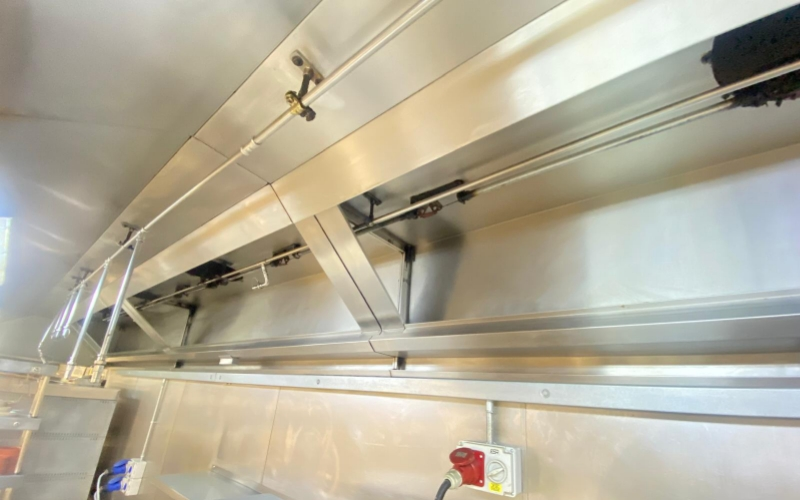
Every kitchen produces fats, oils and grease (FOG) as a natural by-product of cooking. These particles don't just disappear; they travel through the extraction system and settle inside canopies, filters, ductwork and fans. Left uncleaned, this buildup thickens over time, becoming a highly flammable fuel source directly above your cooking line.
Why Grease Buildup Is a Serious Fire Risk
Kitchen extraction systems are designed to pull heat, smoke and grease-laden air away from the cooking area. That's exactly why they're dangerous when neglected — a fire that starts at the cookline can travel through grease-lined ductwork and spread rapidly into roof spaces, service risers and neighboring parts of the building.Fire and insurance bodies have repeatedly flagged extract duct fires as a leading cause of severe damage in commercial kitchens, often resulting in extended closures and costly repairs. Much of this risk comes from grease deposits that build up out of sight — inside ducts, behind filters, along risers — so a kitchen can look spotless on the surface while carrying serious risk internally.
What Is TR19 and Why Does It Matter?
TR19 (Grease) is the UK's recognized industry standard for cleaning commercial kitchen extraction systems, developed by the Building Engineering Services Association (BESA). It sets out exactly how canopies, filters, ductwork, risers and fans should be inspected, cleaned and documented to reduce fire risk and maintain safe ventilation.Under the Regulatory Reform (Fire Safety) Order 2005, commercial kitchen operators have a legal duty to manage fire risk on their premises. TR19 compliance is the accepted way of demonstrating that this duty is being met — and it's increasingly what insurers, landlords and Environmental Health Officers expect to see on file.
What a Proper TR19 Clean Actually Covers
A common misconception is that wiping down a canopy or replacing a filter counts as compliance. It doesn't. A TR19-compliant clean covers the entire extraction run, including:- Canopy and plenum degreasing
- Grease filter cleaning
- Full ductwork cleaning, including sections behind inspection hatches
- Vertical riser cleaning
- Extraction fan and motor cleaning
- Photographic evidence at every access point
- A completion certificate for your compliance records
Beyond Fire Safety: Hygiene, Air Quality and Efficiency
Fire risk is the headline reason for TR19 cleaning, but it's not the only one. A neglected extraction system also affects:
- Air quality: grease-clogged filters and ducts reduce airflow, leaving kitchens hotter, smokier and less comfortable to work in
- Hygiene: trapped grease and food particles create conditions where bacteria and odours can build up
- Equipment lifespan: fans and motors working against restricted airflow wear out faster and cost more to run
- Inspection outcomes: EHO visits and food hygiene ratings increasingly factor in ventilation hygiene, not just food prep areas
Operators who let extraction cleaning lapse are exposed on several fronts at once. Insurers can decline fire-related claims if there's no evidence of a compliant cleaning schedule. Landlords and EHOs can raise it as a compliance failure during routine checks. And in the worst case, a preventable grease fire can shut a kitchen down entirely — with far higher cost than the clean itself would ever have been.
The safest approach is a scheduled cleaning program rather than a reactive one-off — with frequency based on how much grease your kitchen actually produces, not a generic calendar date.
How ProVent Kitchen Clean Can Help
ProVent Kitchen Clean delivers TR19 Grease (2nd Edition) compliant extraction cleaning across London and England — covering canopies, filters, ductwork, risers and fans in a single, fully documented visit. Every clean is photographed and certified, giving you paperwork that satisfies insurers, landlords and EHOs without the chase.If it's been more than six months since your last professional extract clean — or you're not sure your current provider is covering the full system — it's worth getting a free site assessment before it becomes a bigger problem