TR19 Kitchen Extract Cleaning Frequency: A Clear Guide for Restaurant Owners
Ask ten restaurant owners how often their commercial kitchen extraction system should be cleaned, and you may get ten different answers. Some rely on experience, others follow their landlord's requirements, while some only discover their cleaning is overdue when an insurer or fire-safety inspection asks for documentation.
The good news is that BESA TR19 provides clear guidance on kitchen extract cleaning frequency, based primarily on the level and type of cooking activity within the premises.
Understanding your recommended cleaning interval helps reduce grease build-up, maintain effective ventilation, support fire safety, and keep the appropriate compliance documentation for your business.
How Often Should a Commercial Kitchen Extraction System Be Cleaned?
The recommended cleaning frequency depends on how heavily the kitchen extraction system is used. Higher levels of cooking activity generally produce more grease and vapour, meaning deposits can accumulate more quickly throughout the canopy, filters, ductwork and extraction fan.
A typical cleaning schedule is:
| Kitchen Usage | Typical Daily Operating Hours | Recommended Cleaning Frequency |
|---|---|---|
| Heavy use | 12–16 hours | Every 3 months |
| Moderate use | 6–12 hours | Every 6 months |
| Low use | Under 6 hours | Every 12 months |
Heavy-use kitchens commonly include busy restaurants, takeaways, hotels and commercial kitchens operating for long hours with high-grease cooking such as frying, chargrilling and wok cooking.
Moderate-use kitchens may operate for fewer hours or produce less grease, while low-use kitchens typically have shorter operating periods and lower cooking volumes.
However, operating hours should not be considered in isolation. The type of cooking, equipment used, volume of food produced and level of grease accumulation should also be considered when assessing the appropriate cleaning programme.
Why Kitchen Extract Cleaning Frequency Matters
Grease and cooking residues can gradually accumulate inside an extraction system. While some areas may be visible from the kitchen, significant deposits can develop inside ductwork and other components that cannot be seen during normal operation.
As grease accumulates, it can:
Increase the potential fire risk within the extraction system
Restrict effective airflow and ventilation
Reduce extraction fan performance
Create unpleasant grease or burnt-oil odours
Increase maintenance requirements
Make future cleaning more difficult and costly
Create difficulties when demonstrating appropriate cleaning and maintenance records
Regular professional cleaning helps keep the extraction system in a safer and more efficient condition.
TR19 Cleaning Is More Than Cleaning the Canopy
One of the most common misconceptions is that commercial kitchen extraction cleaning simply means wiping the visible canopy.
A professional extraction clean should assess and clean the relevant accessible components of the system, which can include:
Canopy and internal hood surfaces
Plenums
Grease filters
Extraction ductwork
Extraction fan and associated components
Other accessible parts of the extraction system
Fire dampers where applicable and accessible
The exact scope of work depends on the design and configuration of the individual extraction system.
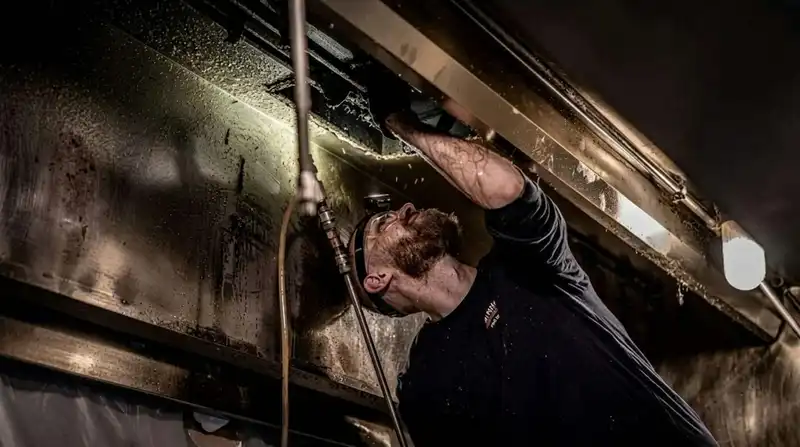
Professional commercial kitchen canopy cleaning is an important part of maintaining a hygienic and properly maintained kitchen environment. Removing accumulated grease and cooking residues can help support ventilation performance and reduce fire-related risks.
For more information about our professional TR19-compliant cleaning service, see our Commercial Kitchen Canopy Cleaning service.
What Happens If Your Kitchen Is Used More Than Before?
Your cleaning schedule should reflect how your kitchen actually operates.
For example, a restaurant originally operating six hours a day may increase its opening hours to twelve hours. Alternatively, a business may introduce a new chargrill, fryer or wok station, significantly increasing grease production.
Changes such as these can affect how quickly grease deposits build up inside the extraction system.
You should review your cleaning requirements if you have:
Increased your daily opening hours
Added new cooking equipment
Increased food production
Introduced higher-grease cooking methods
Expanded your restaurant or kitchen operation
Noticed increased grease accumulation
Experienced changes in extraction performance
When your kitchen operation changes significantly, it is sensible to reassess whether your existing cleaning frequency remains appropriate.
Why TR19 Documentation Matters to Restaurant Owners
Professional extraction cleaning should not simply leave the kitchen looking cleaner. Businesses should also maintain appropriate records showing when cleaning was completed and what work was carried out.
Depending on the requirements of your business and insurance policy, documentation may be important when demonstrating that the extraction system has been maintained in accordance with the required cleaning programme.
It is therefore important to keep your cleaning reports and verification documentation safely and ensure that your cleaning frequency matches the requirements applicable to your kitchen.
Important: A TR19 certificate does not automatically guarantee that an insurance claim will be accepted. Insurance policies have their own terms, conditions and requirements. Restaurant owners should always check their policy or speak directly with their insurer or broker regarding specific requirements.
Choose a Competent TR19 Cleaning Specialist
The quality of the cleaning is just as important as the frequency.
A low-cost clean that only covers the visible canopy may leave significant grease deposits inside the ductwork and other parts of the extraction system.
When choosing a commercial kitchen extraction cleaning company, ask:
Are the technicians appropriately trained and competent in TR19 requirements?
Will the extraction system be cleaned beyond the visible canopy?
Will the ductwork be inspected and cleaned as required?
Will you receive photographic evidence of the completed work?
Will appropriate verification documentation be provided?
Does the company understand the requirements of commercial kitchen extraction systems?
Choosing an experienced and competent contractor gives you greater confidence that the work has been completed properly.
Signs Your Kitchen Extraction System May Need Cleaning
Don't wait for your next scheduled cleaning date if you notice signs of excessive grease accumulation or poor extraction performance.
Your system may require attention if you notice:
Grease dripping from the canopy or filters
Heavy grease deposits around extraction components
Smoke or steam taking longer to clear
Persistent burnt or greasy smells
Reduced extraction performance
Excessive grease around the fan or duct access points
Increased cooking volume since the previous clean
Missing or outdated cleaning documentation
These signs should be investigated rather than ignored, particularly in busy commercial kitchens.
Quick Self-Check for Restaurant Owners
Ask yourself:
When was your extraction system last professionally cleaned?
If you cannot remember, check your previous cleaning report or certificate.
How many hours does your kitchen operate each day?
Compare your operating hours with the recommended cleaning intervals.
Has your cooking volume increased?
More covers, longer opening hours or additional cooking equipment can result in faster grease accumulation.
Was the full extraction system cleaned?
Check whether the previous service covered the relevant ductwork and extraction components rather than only the visible canopy.
Do you have your cleaning documentation?
Keep your reports, photographs and verification documents available for your records.
TR19 Kitchen Extract Cleaning: The Bottom Line
Commercial kitchen extraction cleaning should be planned around the way your kitchen operates. As a general guide, heavy-use kitchens may require cleaning every 3 months, moderate-use kitchens every 6 months, and low-use kitchens every 12 months.
However, operating hours are not the only consideration. Cooking methods, grease production, equipment and changes in kitchen usage should also be taken into account.
Regular professional cleaning helps reduce grease accumulation, support effective ventilation and maintain a safer commercial kitchen environment. Keeping proper documentation also helps demonstrate that your extraction system is being professionally maintained.
If you're unsure whether your kitchen is due for a clean, reviewing your previous cleaning records and having the extraction system professionally assessed is a sensible first step.
Frequently Asked Questions
How often should a commercial kitchen extraction system be cleaned?
Cleaning frequency depends on kitchen usage and cooking activity. A common TR19-based schedule is every 3 months for heavy-use kitchens, every 6 months for moderate-use kitchens and every 12 months for low-use kitchens.
Is TR19 kitchen extract cleaning a legal requirement?
TR19 is an industry standard and guidance for the cleaning and maintenance of commercial kitchen extraction systems. Specific legal, fire-safety and insurance requirements can vary depending on the premises and circumstances, so businesses should ensure they understand the requirements applicable to their operation.
Does TR19 cleaning include the ductwork?
A proper extraction cleaning service should address the relevant accessible areas of the extraction system, including ductwork where applicable. Cleaning only the visible canopy does not represent a complete extraction-system clean.
Why is ductwork cleaning important?
Grease can accumulate inside extraction ductwork where it is difficult to see during normal kitchen operation. Regular professional cleaning helps control grease deposits and supports the safe and efficient operation of the extraction system.
What documentation should I receive after cleaning?
The documentation provided can vary by contractor and service, but professional cleaning records should clearly identify the work completed. Depending on the service, photographic evidence and verification documentation may also be provided.
Can I clean the extraction system myself?
Basic day-to-day cleaning of accessible kitchen surfaces and filters can be part of normal kitchen maintenance. However, specialist extraction-system cleaning involves areas such as ductwork and extraction components that may require professional equipment, access and appropriate training.
How do I know if my kitchen is overdue for cleaning?
Check the date of your last professional extraction clean and compare it with your required cleaning frequency. You should also consider whether your kitchen's operating hours, cooking volume or equipment have increased since the previous clean.
Professional TR19 Kitchen Extraction Cleaning
ProVent Kitchen Clean provides professional commercial kitchen extraction cleaning across London and England. Our services cover commercial kitchen canopies, extraction systems and associated components, with appropriate verification documentation provided following completed work.
If your restaurant, hotel, pub, café, takeaway or commercial kitchen is due for its next extraction clean, contact ProVent Kitchen Clean to discuss your requirements and cleaning schedule.